It is hard to beat the gators, manatees, and birds you will see on the boat tour at Wakulla Springs in NorthWest Florida. I made a trip with Grand Kids and Daughter. I worked in some contacts with my IC 703 and the Buddistick. The noise level was S zero. I had zero luck on CW. However as it often works out, you change change your luck going SSB. I worked VA2PW in Quebec and WD9FOX in central IL. So that is 2 of the 5 of the contacts I'll need to activate the state park under Parks On The Air POTA. I had several folks observe me on CW and come by for a chat. One guy said that is better than texting and I said yes and no monthly charges either. I also had a long chat with one of the park rangers. He was very impressed. Grands Kids loved it. I hope I can go back to complete the POTA activation.
Greg N4KGL
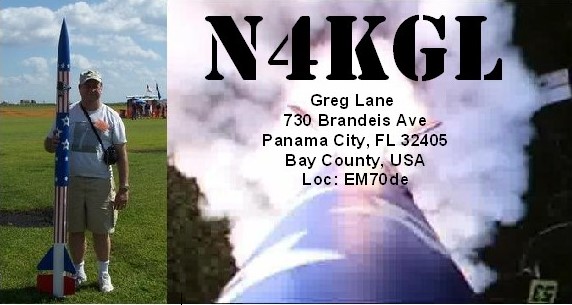
I enjoy Rapid Deployment Amateur Radio, Field Days, QRP, satellites, and CW. I have many friends in the hobby that make it fun. I will keep you posted on what I learn about amateur radio on this blog.
Friday, July 22, 2011
Sunday, July 17, 2011
Enjoyed the Magic Band
6 Meters Band That Is!
There was the CQ WW VHF Contest going this weekend. The band was open to go with it. This is the most I have ever done on 6 meters. I had QSOs with Costa Rica, Belize, Turks and Caicos Islands, Dominican Republic, the Bahamas, Cayman Islands, Cuba and five in Mexico. Lots of fun!
I used the IC-703 at 10 watts. The first go I used my 80 meter doublet which tuned up fine on 6. Then this morning I tried out a rotatable dipole off the vehicle in the driveway. I used the arms and whips that came with the Buddistick deluxe kit.
There was my friend Jason N4JTC in Parker on as well and he worked most of the same stations. Likewise I heard AJ4SQ nearby.
There was the CQ WW VHF Contest going this weekend. The band was open to go with it. This is the most I have ever done on 6 meters. I had QSOs with Costa Rica, Belize, Turks and Caicos Islands, Dominican Republic, the Bahamas, Cayman Islands, Cuba and five in Mexico. Lots of fun!
I used the IC-703 at 10 watts. The first go I used my 80 meter doublet which tuned up fine on 6. Then this morning I tried out a rotatable dipole off the vehicle in the driveway. I used the arms and whips that came with the Buddistick deluxe kit.
There was my friend Jason N4JTC in Parker on as well and he worked most of the same stations. Likewise I heard AJ4SQ nearby.

T Network Tuner
I came across a roller inductor and two large variable capacitors. No idea of what the values are. But certainly the makings of a tuner. So I cleaned them up and wired them up. The tuner seems to work. There are a jumpers on the caps to have the option of using half of each capacitor. I understand you need less capacitance for the higher bands.
The result is a little oversized for QRP portable. Also after some reading on the net, there is some discussion that a L network is preferable but this is my baseline experiment with the T network. I might employ this at my Dad's house where I hope to do some operating from his workshop.
The result is a little oversized for QRP portable. Also after some reading on the net, there is some discussion that a L network is preferable but this is my baseline experiment with the T network. I might employ this at my Dad's house where I hope to do some operating from his workshop.
Wednesday, July 6, 2011
20 Meter Delta Loop Back Yard Portable
I always wanted to try a delta loop and I had my chance early on the 4th of July while visiting my Mother-In-Law in Conyers, GA. I got the idea from this link. I used a LDG 4 to 1 balun at the top and about 70 feet of wire. It tuned to resonance easily. The tip of the delta was about 20 feet and the bottom flat section was about 10 feet high. I setup with the 3 watt SST and worked ID, CT and OH. So I'll add this to the BYP Backyard Yard Portable playbook. Here are some pictures. The actual wires of the loop were pretty much invisible to the camera.
Saturday, June 18, 2011
Destin FL QRP Portable Ops
I spent some time in Destin FL as my wife was working there and would have to drive herself home late at night. So my first setup was day time just across the bridge at the National Sea Shore. I put the Buddistick on the picnic table. The conditions were not great on 20 meters and I had one ham tell me I was 119 and to go QRO. My luck was better with a contact with N4EX/2 in northern NY state near Montreal. I also had the start of a QSO with K1GCD in Maine but he lost me.
The second setup was in the Target Parking lot after dark. I started with the 40 meter hamstick dipole but that was not cutting it. Then I went to the Buddistick at 20 feet on the mast with the radial going over to a light pole. That did a god job on 40 and I worked W0ERE in MO, W4EDE in Miami Beach and K4IBZ over in Crestview FL.
So the eight hours went by pretty quick and enjoyed the time on the air.
The second setup was in the Target Parking lot after dark. I started with the 40 meter hamstick dipole but that was not cutting it. Then I went to the Buddistick at 20 feet on the mast with the radial going over to a light pole. That did a god job on 40 and I worked W0ERE in MO, W4EDE in Miami Beach and K4IBZ over in Crestview FL.
So the eight hours went by pretty quick and enjoyed the time on the air.
Sunday, May 29, 2011
Shortened Dipole with Matching Section
I tried a shortened dipole (inverted V) by using the IMAXMIN.EXE program on the W5DXP no tuner page. The minimum dipole length the program will accept is 107.19 feet for 3.5 MHz. So I went with 108 feet. The Imax or good length of open wire feeder is 29.7 feet for velocity factor of .9. My chosen feed-line is 300 ohm window line from DX engineering. Note I am using a bead type choke balun at the end of the 300 ohm feed-line and converting to coax.
I tried this out with a portable mast consisting of 4 foot military mast sections. The bottom is a tripod using a tripod adapter I found on EBay. There is a six foot section of PVC conduit at the top. This gives the antenna a support at the center of 23 feet. The ends are going to stakes or a low fence. The ends are only about 3 feet off the ground. The SWR was very good at 3.5 MHz. A pleasant surprise is that 7 MHz the SWR is under 3 to 1. A full size 80 meter dipole will have a very high impedance on 40 meters. But this dipole is usable on 40 meters with a the internal tuner of my IC-703. I had done a similar check out for a 7 Mhz dipole at 54 feet of length and it tuned under 3 to 1 on 20 meters with a 14 foot 8 inch feed-line.
Now back to the 108 foot dipole. I got it to work on 20 meters by reducing the feed-line to about 24 feet. To try out different feed-line lengths I have a lot of 300 ohm sections of different lengths. I am using the European terminal strips ( the larger size) to join the sections and this works well. So you might say the the 108 foot dipole is like the G5RV and I would say you are right. I don't have one but it likely works the same. The 54 foot dipole is close to a G5RV Junior.
Now I am looking to use either the 108 or the 54 foot version at Field Day based on space available. I am not convinced the guys on the mast are needed with the tripod. They may backfire if a car catches one and turns the whole rig over. I have some homemade A-frame masts from a prior Field Day that I could use to get the ends of the dipoles up at 13 feet.
So credit goes to Cecil W5DXP for this no tuner concept and for me it explains what is going on for the G5RV type antennas.
I tried this out with a portable mast consisting of 4 foot military mast sections. The bottom is a tripod using a tripod adapter I found on EBay. There is a six foot section of PVC conduit at the top. This gives the antenna a support at the center of 23 feet. The ends are going to stakes or a low fence. The ends are only about 3 feet off the ground. The SWR was very good at 3.5 MHz. A pleasant surprise is that 7 MHz the SWR is under 3 to 1. A full size 80 meter dipole will have a very high impedance on 40 meters. But this dipole is usable on 40 meters with a the internal tuner of my IC-703. I had done a similar check out for a 7 Mhz dipole at 54 feet of length and it tuned under 3 to 1 on 20 meters with a 14 foot 8 inch feed-line.
Now back to the 108 foot dipole. I got it to work on 20 meters by reducing the feed-line to about 24 feet. To try out different feed-line lengths I have a lot of 300 ohm sections of different lengths. I am using the European terminal strips ( the larger size) to join the sections and this works well. So you might say the the 108 foot dipole is like the G5RV and I would say you are right. I don't have one but it likely works the same. The 54 foot dipole is close to a G5RV Junior.
Now I am looking to use either the 108 or the 54 foot version at Field Day based on space available. I am not convinced the guys on the mast are needed with the tripod. They may backfire if a car catches one and turns the whole rig over. I have some homemade A-frame masts from a prior Field Day that I could use to get the ends of the dipoles up at 13 feet.

So credit goes to Cecil W5DXP for this no tuner concept and for me it explains what is going on for the G5RV type antennas.
Saturday, May 28, 2011
QRP session with WD0HDR
I met my friend Thomas at a park area in his sub-division Saturday morning. Thomas, WD0HDR, is a long time friend of the Lane family and recently moved back to Dothan after many years from Nebraska. Fortunately QRP is a our common interest and you may work him on 40 meters. We got on 40 and 20 meters with IC-703 and the Buddistick which was supported by a mast with a tripod at the base. The mast is made up of 4 foot military mast sections and the tripod adapter is a new find off of EBay.
Greg N4KGL
Greg N4KGL
Subscribe to:
Posts (Atom)