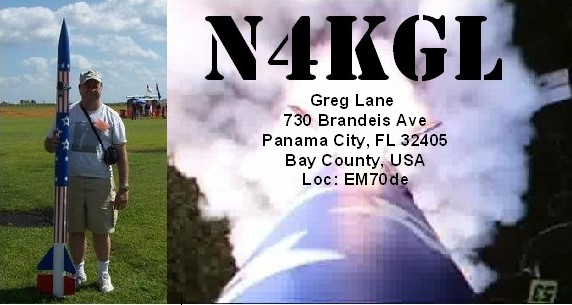
I enjoy Rapid Deployment Amateur Radio, Field Days, QRP, satellites, and CW. I have many friends in the hobby that make it fun. I will keep you posted on what I learn about amateur radio on this blog.
The ARRL 2016 National Parks On The Air Event has concluded with the years end. It was a very popular amateur radio event to help celebrate the National Park Service Centennial. So I decided to squeeze in one more activation. I chose the closest site for me. It is the Okaloosa Island Day Use Area which is a little more than an hours drive just West of Destin, Florida. It is part of Gulf Island National Seashore which is designated SS08.l upload my logs to Log Book Of The World LOTW and the World Wide Fauna and Flora system. Note the NPOTA SS08 is KFF-0661 under WWFF. This is my eighth SS08 activation and the sixth time at this Okaloosa Island site.
The weather was a bit chilly at 55 degrees (F) and cloud cover. I started with a SO 50 satellite pass which netted two contacts. On HF I used the Elecraft KX2 running ten watts to a N6BT Bravo 7K vertical. I used 100 feet of RG-8 to get the antenna close to the saltwater shore on the North side. I did not go with my NVIS antenna for 40 meters since foF2 was not above 7 MHz. That nixed any HF contacts back to Panama City. I was able to use the longer skip on 40 meters. I snagged Craig NM4T near Huntsville which was as short as I could get. It was a surprise and pleasure to work Craig my buddy and the Huntsville QRP guy. Also Suzy was my buddy once again.
So my total is 60 contacts. Several were the first SS08 for the chasers. The breakdown was
40 CW (6)
40 SSB (12)
20 CW (20)
20 SSB (20)
SO 50 (2)
NPOTA has been a great experience. It ended too soon. My plan right now is to continue my start with the WWFF-KFF for portable activations. It has hunters which are the equivalent to chasers in NPOTA.. You can take credit for 2016 NPOTA activations in that system by submitting your logs. The nice thing about KFF is that it includes National and State Parks. There are lots of State Parks in Northwest Florida for sure.
Northwest Florida is loaded with State Parks. See this map. WWFF-KFF is an on-going program that can fill in the void when National Parks On The Air NPOTA 2016 concludes. KFF activators need 10 contacts from a state or national parks and more. Hunters can just register and get rewards without sending their logs. I have done a couple of activations recently. You can also send in applicable activation logs you have back to January 2016. I sent in my NPOTA logs to Jason for a couple of additional activation credits.
Here is a note from Jason W3AXX who is the KFF coordinator.
We at parksontheair.com have taken the momentum of the National Parks on the Air program, added National Wildlife Refuges/Parks/ Recreation Areas, and State Parks of all 50 states. There are free awards, and a nice community ready to go in 2017. It is a permanent program and part of the World Wide Flora and Fauna, which has international backing and active all over from Europe to Australia since 1993. Please find the "click here" to get started on the parksontheair.com main page. https://www.facebook.com/groups/parksontheair/If you have any questions, please send an e-mail to w3aax@outlook.com. 73 44 W3AAX - Jason
I was off on Friday, December 23rd. I decided to activate St Andrews State Park Florida KFF-1917 for the World Wide Fauna and Flora program. It is the closest State Park to my home QTH. I have so many antenna choices that picking one can be difficult. This time I chose the PY1AHD Alexloop which is a magnetic loop for HF. There was also a SO 50 satellite pass. So I packed my KX2 the Alexloop with tripod, and the Elk antenna disassembled into one backpack. Suzy and I walked to my favorite picnic table which is right next to the Grand Lagoon. I always try to be as close to saltwater as I can to enhance low angle vertical radiation. My results were
40 meter CW (3)
40 meter SSB (4)
2 meter FM simplex (3)
20 meter CW (8)
20 meter SSB (5)
VHF/UHF SO-50 Sat (1)
24 total
The HF contacts were good for 10 watts and the Alexloop. My DX contact was CU3AA in the Azores 3300 miles away. I spotted myself on DX Summit which brought some WWFF hunters who found me. My cadre of local chasers included WB4BLX, W5RE, K4LIX, N4STC and N1HQ. The good news is that Northwest Florida has many State Parks. They will be popular with the WWFF hunters. Merry Christmas!
Being December, this is the last month for the 2016 ARRL National Parks On The Air Event. I got another activation done on December 11th. It was the Okaloosa Island Area for the Gulf Islands National Seashore which counts for SS08. I was also recently introduced to the World Wide Fauna and Flora Program by Jason W3AAX who is the National Coordinator for the United States Program which is designated KFF. WWFF has activations and chasers similar to NPOTA and SOTA. The sites for activation includes all State Parks in addition to the National Parks and also some Wildlife preserve areas. This gives all of us USA portable operators lots of opportunities. WWFF looks promising for Rapid Deployment Amateur Radio (RADAR) operators. Jason mentioned their may be the possibility for a RADAR Award in KFF. I made this outing a WWFF-KFF activation as well as NPOTA. The Gulf Islands National Seashore is designated as KFF-0661. There is an impressive map of the KFF entities here.
My rig was the Elecraft KX2. I also used the QRPWorks Sidekar. My antenna was a adjustable dipole supported by 9 foot poles. I use this antenna for NVIS on 40 meters to improve my chances of working friends back in Panama City which was about 45 miles to the East. The antenna worked well as I got 599 reports from K4GXV and WB4BLX in Panama City on 40 CW. However on 40 SSB I was not workable funny right. I later checked the Eglin Ionogram Station which would be about 20 miles from the island. I found that the foF2 critical frequency was 7.025 at 1715 UTC. So I believe I had good NVIS on the CW end of the band but NVIS failed on the SSB part of the band above the critical frequency. Of course the antenna worked well at longer distances on 40 meters.
40 meter NVIS Dipole
I had several of surprises. First I was called by Don KK4QAM a RADAR buddy in Sweetwater Alabama on 40 CW. I did not know Don had taken up CW. I also worked Don on 40 SSB. Second I worked a friend Bob W5RE in Crestview, Florida on 40 PSK-31. I used the PSK capabilities of the KX2 with the help of the SideKar. I have a tiny wireless keyboard for the SideKar that works very well. Bob was keying in his info on his Elecraft K3S. So neither one of us used a PC. Last surprise was a call out on 146.52 FM pulled in W5RH who was practically in sight on the bay. It is nice that he monitors the calling frequency.
Elecraft KX2 and QRPworks SideKar
A couple of notes. First, I used a Traveler Headset I got used. I found an adapter for the the KX2 from K6VHF on Ebay. It did a good job. Second, I used the Fast Log Entry (FLE) Software recommended for WWFF. It is an easy way to enter your contacts from paper or from a simple text file. I used ADIF Master to add a FREQ field to the ADIF output and I was able to also upload the file to LOTW for NPOTA.
All together I had 41 contacts. 3 on 40 CW, 12 on 40 SSB, 1 on 40 PSK, 11 on 20 CW, 13 on 20 SSB and 1 on 2 FM Simplex. I also adjusted the dipole for 20 meters so it got the job done for the activation. I tried 10 meters but none of the contest signals were strong enough to work. Suzy was my buddy. There were few people their as the weather was chilly with the cloud cover. The sun did come out before the day was over. This was my seventh activation of SS08. Perhaps I will get one more in before NPOTA concludes.
I squeezed in some amateur radio at the Southeast Alabama Rocketry Society (SEARS) launch in Samson, Al. My goal was to QSO with my friends on 40 meters. I used a 40 meter dipole 9 feet above the field to take advantage of NVIS propagation. My rig was the KX2 at 10 watts.
I had success working:
Bob WB4BLX in Panama City (85 miles) CW
Bob W5RE in Crestview, FL (49 miles) CW
Tom WD0HBR in Dothan, AL (50 miles) CW
Phil N4STC in Panama City, FL (85 miles) SSB
Steve N4VSP in Lynn Haven, FL (85 miles) SSB
Bob KK4DIV in Chipley, FL (48 miles) SSB
Thanks Guys!
KK4DIV was running 5 watts to Chameleon Loop from the Falling Waters State Park. I was very pleased. This antenna is a good choice for 40 meters particularly the close in contacts. I can shorten it up for higher bands as well. I forgot the stakes that came with the poles but I improvised. The poles breakdown into 3 foot sections that are pack-able. Here are a few more photos from the launch.
It happened that my wife had to work the first part of the day in Port St Joe. Suzy and I took advantage of the time to do some pedestrian mobile and satellite operating. Port St Joe has many good operating spots. I chose Frank Pate Park which has a boat landing and pavilion on the bay front. I had good luck all day and enjoyed the nice weather. The operations included
working three stations on a SO 50 satellite pass
working Jim K4LIX on 40 meters SSB back in Panama City (about 40 miles)
working Ken N4KS in New Smyrna Beach, Florida (268 miles) using the KX2 and a whip on 40 meters CW.
working Tom WD0HBR in Dothan (100 miles) with the KX2 and a NVIS dipole on 40 CW.
working Phil N4STC in Panama City and Ron KK4DWE in Lynn Haven on 40 SSB.
listening to the FO 29 linear transponder satellite using the FT 817 for the first time
visiting with Norm K4NEB who lives in PSJ.
I don't think it could get much better. We later had Thanksgiving dinner back in Panama City. I am blessed in my family and my hobby. It was a much better day than I expected. I got most of the operating on the GoPro.
The RaDAR Challenge originated with Eddie ZS6BNE in South Africa a number of years ago. It encourages portable operating but with a twist that you should be able to move quickly and redeploy. In the challenge, you make five contacts on the amateur bands and move to the next location to continue making contacts. When you put a time constraint like four hours, your operating skill, the equipment pack-up with the antenna all need to be optimized for the challenge. The size and weight of the equipment is particularly important when you transition between locations on foot. Since there are many choices of radios, antennas and operating frequencies you tend to experiment with new ideas from challenge to challenge. The RaDAR challenge is the first Saturday of April and November and recently the third Saturday of July.
A view of Opal Beach
My choice for the November 5th 2016 RaDAR Challenge was Opal Beach on Santa Rosa Island Florida. It is part of the National Park Service's Gulf Islands National Seashore. This was helpful since National Parks On the Air encourages activators and chasers during the 2016 celebration of the National Park Service Centennial. My contacts count toward the activation and there were chaser stations actively seeking my contacts. The Opal beach site has wonderful access to saltwater. In particular, the North shore on the Sound provided a path over saltwater toward the North and also extending toward the East and West. I am have become a believer in the saltwater effect for antennas.
This was the second challenge that I have used the KX2 from Elecraft. The internal battery and internal tuner are very advantageous for portable operating. I tried two new antennas this year. The first was a short loaded whip. This allows the KX2 to be operated like a handy talkie while standing or walking. This is known as "pedestrian mobile" operating. The four foot whip is augmented with a 13 foot wire attached to the rig ground that trails on the ground. This is the most minimalistic antenna I have found. I have had surprising success with it walking around the neighborhood. At Opal Beach I could count on the saltwater effect for enhancing low angle radiation from the vertical whip and reducing ground losses.
The Elecraft KX2 in used as an HF Handi Talkie
I am fortunate to have a cadre of chasers in Panama City and some in Alabama. I usually start on 40 meters to make contact with them. It takes high angles of radiation to work them when they are beyond ground wave. Opal Beach is 80 miles from Panama City. An antenna that enhances high angle radiation is called a Near Vertical Incidence Skywave antenna or NVIS. I used a low dipole this time for 40 meters. I recently read that a low dipole is deployed over saltwater, the reflected signal off the water can enhance NVIS. I chose to deploy mine right on the surf. The center was at about eight feet and the ends about six feet over the waters edge.
40 meter NVIS Dipole
I have recently gotten into using the FM satellites with Eddie ZS6BNE influence. I timed my four hours operating period to coincide with an SO 50 pass. Making a satellite contact is a bonus for the RaDAR challenge. I packed a Yaesu FT 60 HT for this purpose and an Elk log periodic antenna. The Elk when disassembled is packs into a small bag.
The Elk Sat Antenna
A first for my RaDAR operating was getting the rig and all these antennas into a backpack. I previously used carts to carry heavy poles and even a QRO rig. I was not encumbered with that this year. Carts are tough to roll on the beach.
All the gear fit in one backpack including the dipole supports and theSat antenna
So how did all this work out. I walked a kilometer to my first location which was a point extending out into the Sound on the North side of the island. The four hour clock started. I setup the NVIS dipole right over the edge of the surf. I could not find anyone on 40 the first half hour. But my luck changed when I found my Dothan friend Tom WD0HBR in QSO with anther station. The thing was he was visiting in Birmingham and using QRP with an attic antenna. We had a solid QSO. I got a big kick out of that. I got a couple more CW contacts and finished the five on 40 SSB. I missed my Panama City buddies unfortunately.
The point on the Sound surrtounded by saltwater
I continued back along the North shore the way I came and put the whip on the KX2 and operated pedestrian mobile style. I was able to work five in ten minutes on 20 CW. They were NPOTA chasers and several were in California. I actually had to disappoint some chasers when I went QRT to move to the third location (same as the first). At the third location, I went with the KX2 and the whip on 20 SSB. I did not get a string started by calling CQ. But, I did get five by hunt and pounce. Several were other NPOTA stations. W4VIY was also doing the Gulf Islands National Seashore at Fort Pickins at the West end of Santa Rosa Island. I was probably working him ground wave. The last fifteen minutes was the SO 50 satellite pass. It was very busy, but I snagged the one contact I needed for the RaDAR Sat bonus by working KK4FEM.
Pavillions on the site
I was lucky it all came together in regard to equipment, the site, the propagation and the weather. I did miss having RaDAR to RaDAR contacts this time. I would also liked to have Suzy leading the way, but dogs are allowed on the beach there. If you are interested in RaDAR visit visit Eddie's Blog and Google+ RaDAR Community. For National Parks On the Air visit ARRL NPOTA Info and Google+ NPOTA Community