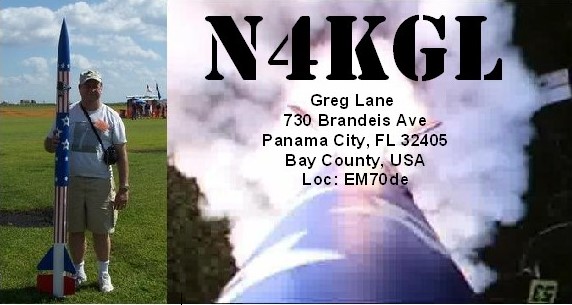
I enjoy Rapid Deployment Amateur Radio, Field Days, QRP, satellites, and CW. I have many friends in the hobby that make it fun. I will keep you posted on what I learn about amateur radio on this blog.
I had let my lack of patience delay using any kind of antenna modeling software. I could see the results others got for particular antennas, but I could not do it myself. With Field Day coming, I have many choices of antennas including dipoles doublets and end-feds. What are the radiation patterns for these antennas at the height I can raise them? What will the Standing Wave Ratio (SWR) be across multiple bands?
The antenna view of the one wavelength 80-meter horizontal loop
I had some insight into EZNEC after listening to Roy Lewallen W7EL's QSO Today Podcast. Roy provides an EZNEC demo version. It is limited to 20 segments. For the simulation, wires are divided into segments. I was able to exercise the program's features by starting with the BYdipole.EZ model. "BY" means backyard. I found when I did more complex antennas, I got a warning to increase the number of segments. So I purchased the regular version EZNEC 6.0 which allows 500 segments.
The wires input for EZNEC
It takes some effort to put the wires into EZNEC for complex antennas. I got lucky that EZNEC has a wizard to create the wires for a loop. I used that to create the four wires for square one wavelength 80-meter horizontal loop. That antenna is under consideration for the N4Y field day station a Falling Waters State Park. We have permission to extend our wires into an open field adjacent to the campsite.
80 meters elevation plot
Using EZNEC, I could see for myself that at one wavelength the loop is a cloud burner. That is fine with me. 80-meter has not yielded many contacts and using NVIS is just as well. The hot bands for field day are 40 and 20 meters. The elevation comes down to the neighborhood of 50 degrees for 40-meters and 30 degrees for 20 meters. Of course, you can just characterize the pattern with a few numbers. The patterns are pretty complex. Bob WB4BLX reminded me that L. B. Cebik W4RNL (SK) called this category of antenna HOHPL or Horizontally oriented Horizontally Polarized Large antenna.
The 3-D plot for 20 meters
I have not acquired all the insights required for antenna modeling, but at least I have a tool to assist. The big skyhook loop looks promising for Field Day if you have the room. It will take all my fiberglass poles to elevate 268 feet of wire twenty-five feet above the ground. The matching could be done with a tuner like the Icom AH-4 or it may be that a 2.5 to 1 balun will make the loop usable on its resonant bands 80, 40 and 20 meters. If I am lucky, I can deploy the loop here in town before Field Day to test the physical antenna
It is now less than 30 days to the June 23/24 ARRL Field Day. My friend Dennis WA6QKN and I are looking forward to operating using callsign N4Y from Falling Waters State Park near Chipley Florida. I was at Falling Waters for the June 2017 ARRL Field Day and January 2018 Winter Field Day. My last two setups were limited to one pull-in campsite. This space limitation was the motivation for the 100-foot vertical loop that uses 30 feet on the ground. Last June, I used the Icom 7300 and last January I used the Elecraft KX3 on QRP. The loop works nicely with the Icom AH-4 tuner. I may lean toward the Icom 7300 for ease of use with the AH-4.
The new wrinkle is our reserved site is adjacent to a large open field. I got a green light from the park staff to extend our antennas into the field. So now I can start daydreaming about alternative antennas. Other than longer and higher is better, I don't have much skill in evaluating antennas. Unfolding the 100-foot loop and making it a 100-foot doublet is an idea. I could also go with a 40/20 fan dipole. What about an 80-meter horizontal loop on all bands? So having many choices is a dilemma. I can recommend the 100-foot loop for limited space based on using it for Field Day and other portable events. I still may go 100-foot loop and add a second antenna, perhaps vertically polarized, for diversity sake.
The QSO Today Podcast hosted by Eric Guth 4Z1UG is approaching two hundred episodes. It is quite a feat producing a weekly podcast consistently for almost four years. The secret is that Eric enjoys doing the interviews as much as his listeners enjoy hearing them. The fact is that Eric and I learn something new in each episode. Eric says the guests are the movers and shakers of amateur radio. He is right, and there is an endless list in this hobby. Eric starts with how each guest started in ham radio. From there, Eric explores the unique talents and accomplishments of each guest. There is a tier of guests you have heard of like Bob Heil K9EID and Wayne Burdick N6KR. But the guest list is deep and wide. They include QRPers, DXers, contesters, homebrewers and more.
I am getting about an hour of access to these guests per episode. It is access that only those who run in their circles would have. Eric is on a mission to capture an oral history of the ham radio experience. He gives older guests priority. I was sad to hear about the recent passing Art Bell W6OBB. Eric recorded Art's story about two years ago. Art had an exceptional story in ham radio and broadcasting.
I particularly enjoy guests that played a role in or witnessed history first hand. Examples are
Laurie Margolis, G3UML who reported and scooped the invasion by Argentina of the Falkland Islands starting the Falklands war in 1982,
Vjollca Belegu, Z61VB, Kosovo’s first YL ham radio operator, who survived a dark period in Kosova’s history when lives and ham radio were derailed, and
I missed out on the hobby for 25 years and never had Elmers in the realm of DXing, Contesting and homebrewing. Now I know what Mult-Multi, SO2R, and WRTC are about. I previously had no clue. If you want to enjoy these podcasts for their Elmer value, you will just have to find the time. I take advantage of time in my vehicle. Frankly, I am guilty of binge listening. I pick up more gold nuggets on the second listen. I am on a quest to recall the stories from just the name and call. It is my memory exercise.
Thanks to Eric and his guests, for these podcasts. Please accept my congratulations in advance for two hundred episodes. They are enhancing my ham experience immensely.
I enjoyed attending the April 28th event on the Square in Headland, Alabama. It was an opportunity to visit with Tom WD0HBR and my other ham friends from the Dothan area. I started with breakfast at Hardees at 7 AM and then went over to the site. I brought Suzy with me this year. She worked the crowd for belly-rubs. I did not stay for the whole event as I needed to also visit my Mom who lives in Dothan.
I have been hearing many references to the ARC-5 military line of radios on QSO Today Podcast. Don K1DC brought his line of ARC-5 gear to sell. It was my first chance to see this famous gear close up. I did not bring it home, but enjoyed the tour by Don.
Don K1DC ARC-5 gear
Don K1DC ARC-5 gear
Another friend, Robert KE4AL, brought his Icom 910 rig to do demos for amateur satellites. Robert tunes his rig manually instead of using computer control to adjust for doppler. He showed me how it is done on a linear satellite pass. I will try to repeat this technique with my Icom 910. BTW, Robert is going with Matt NJ4Y on July 6-8 to the Dry Tortugas, grid EL84, in the Florida Keys. They will be doing HF and satellites.
Robert KE4AL works a Sat
KE4AL's Icom 910
I usually bring something to demo. This year, I operated my Elecraft KX2 from a park bench. The rig was setup like an HF HT with a 40 meter MFJ loaded whip and a nine foot counterpoise wire. With Tom WD0HBR as my witness, I worked Jim, K4VRT in Tallahassee, Florida. Jim was the net control for the Sunrise Net on 7.123. Jim copied all my info. We all know a four foot whip is very inefficient antenna on 40 meters, but you can have success never-the-less.
The scene at the Square in Headland
The scene at the Square in Headland
I have to say the social side on amateur radio is a big benefit of the hobby. It was nice to visit with my friends at the Headland Tailgate.on a beautiful April day.
Bob KK4DIV and I went to Dead River Landing in Walton, County, FL for QRP To The Field.
QRPTTF is an annual operating event to encourage QRPers and SOTA stations to get out of the house and operate portable “from the field” or a summit, and of course, have fun. Find a nice operating location for yourself, or combine it with some buddies for a day-long adventure.
The theme for this year was "A River Runs Through It". Thus we chose the Dead River Landing on a slough of the Choctawhatchee River. We used Dead River in our exchange. This venue was ideal having a pavilion by the river under oak trees. The oak trees were just the ticket for a 40-meter OCF dipole. We also had an elevated 20-meter vertical for a while and later traded it for a 20-meter dipole.
Bob and I operated under our own calls. This QRP event was 5 watts CW and 10 watts SSB. Bob works SSB. He used a new Yaesu FT 891. I used the Elecraft KX2. Since we were working concurrently on two bands, interference between the rigs can be an issue. Bob's rig on 20 meters was raising the background noise in my rig of 40 meters. It was an opportunity to use some band-pass filters I purchased from DX Engineering. We put the 40-meter filter on my rig. It did not cure the noise. However, putting the 20-meter band-pass filter on Bob's rig cured the noise.This will come in handy for a multiple transmitter Field Day.
Bob KK4DIV
In QRPTTF, rivers and SOTA locations count as multipliers in addition to their SPC. I did not hear a flood of TTF stations, but I ran across them during the day. In terms of rivers, I worked
KC9RH/P Town Creek GA
KB4QQJ Haw River NC
KJ5FA Big Tiny Creek AR
WB5BKL Colorado River TX?
For SOTA I worked
KC4WZB W4G/NG-027 GA
N5DRG W5T/DE003 TX
WC6J W6/NS290 CA
WG4I W4C/EM001 NC
Additional SPCs included AL, FL, OH, MD, IN, KY, TN, MO, SC, MI
In summary
40 CW 15
40 SSB 5
20 CW 4
20 SSB 1
Total 25
Bob, Suzy and I had a good time. The weather was comfortable and the river was very scenic. I will definitely add this venue to my list for future operations. On the return trip, Bob and I listened to the Dennis Blanchard K1YPP QSO Today on which Dennis talks about his 2100 mile hike of the Appalachian Trail. You will find more photos at this link.
The April RaDAR Challenge coincides with the Florida State Parks On The Air Contest. The FLSPOTA Contest is sponsored by the Lakeland ARC. Thanks to Matt NJ4Y who is one the organizers. RaDAR can play well with other events like the FLSPOTA Contest. My usual venue for RaDAR is a Florida State Park anyway. The first Saturday of April last year was perfect weather. This year the forecast for rain got worse the closer we got to the day. I even considered bailing out. However, why not start and see what happens. The forecast for rain was correct by the way.
The Chameleon vertical deployed quickly while it was raining
In Northwest Florida, we are blessed with many state parks. Since RaDAR encourages movement, we moved by vehicle and visited five parks along the coast in succession. My buddy Dennis WA6QKN is on my RaDAR team so we braved the rain together. We operated out of the van. I call it Sonic Style because we are like the two guys in the Sonic commercials.
Greg N4KGL
Dennis WA6QKN
When it is raining, you want to minimize your antenna setup time. The antenna of choice for this situation was the Chameleon whip and the 5-to1 transformer. It was mounted to a four-foot pipe plugged into an umbrella stand base.The Icom 7100 in the van had an LDG IT-100 tuner that let us operate multiple bands the Chameleon vertical. Although we know this is not the best antenna for 40 and 60 meters, we still made contacts on those bands.
Grayton Beach setup
Here are some notes from our stops:
St Andrews State Park:. We made three CW contacts on 20 and one on 40. Then I called out on 60 meters SSB. We were heard by two locals, each named Bob, W5RE, and WB4BLX. We QSY and worked them on 40 CW. I did the SO-50 pass at during the light rain. I think I got Matt NS4Y operating as K4LKL.
Camp Helen State Park: It was raining pretty good. We did a quick setup with the Chameleon vertical. We go one 20 SSB and four 40 meter SSB contacts.
Deer Lake State Park; This park is small. It does have beach access if you walk. We operated out of the parking lot. Our first contact was KD8JA operating FLSPOTA Contest close by from Henderson Beach near Destin FL. In summary, we had two 40 meter SSB, two 40 meters CW and one 20 meters CW.
Grayton Beach State Park: We missed the entrance to this one and did some extra driving. The rain had thankfully passed by We set up the low 40-meter dipole and a resonant 20-meter vertical ground plane. We did CQ FLSPOTA mostly. We got four on 40 SSB and five on 20 SSB.
Top Sail Preserve State Park: We set up the low dipole for 40 meters and quickly make five CW contacts with SKCC stations.
Dennis and I felt we had a full day of ham radio fun despite the adverse weather. Thanks to chasers like Chris VA3ECO that tried but did not find me. We listened to a QSO Today Podcast on the way home. The podcast was Episode 168 with Dennis Verrecchia N6KI about Army MARS during the Vietnam War. Dennis WA6QKN in the van with me shared his own story of setting up phone patches for operators in Vietnam to the US while he was stationed in Guam.
Dennis WA6QKN and Greg N4KGL will start at St. Andrews State Park near Panama City, Florida, head West along the Gulf Coast activating as many Florida State Parks as we can in eight hours. We will try to get at least five and up to ten contacts at each park. Our kick-off will be the SO-50 satellite pass at 1300 UTC/ 9 AM CDT. While still at St. Andrews, we will try the HF bands below and 2 meter FM Simplex on 146.565. Then we will hit the road with stops at Camp Helen, Deer Lake, Grayton Beach, Eden Gardens, Top Sail and other state parks as time permits. We will be passing out the park info for FLSPOTA, POTA, and RaDAR at each park. watch our progress via APRS under callsign N4KGL on https://aprs.fi
40 meters 7.200 LSB, 7.050 CW
20 meters 14.250 USB 14.050 CW
15 meters 21.300 USB 21.050 CW
10 meters 28.450 USB, 28.050 CW
60 meters Channel 4: 5371.5 USB (Not for Contest or Challenge credit)
We will monitor the AC4QB repeater at 145.330 ( Not for Contest or Challenge credit )
Although there are times and frequencies listed above, the better way to know where we are is to enter our calls as triggers in HamAlert https://hamalert.org/login Please register and you can also get the HamAlert App for Android.